I’ve been on a journey of discovery for the whole of the 60 years I’ve been a Christian believer.
It started with the New Testament. I felt the Jesus I was told about in church didn’t quite match the Jesus I found in the gospels. So I tried to find books that explained why.
The Old Testament took longer to figure out. I couldn’t really believe the stories of Adam & Eve and Noah’s Ark were literally factual. I was troubled by a loving God apparently ordering cruel genocide.
And so I prayed about it, asking God to show me how to understand the Bible properly, especially the Old Testament. And I believe he answered me, by leading me to a number of books which gave me a new perspective.
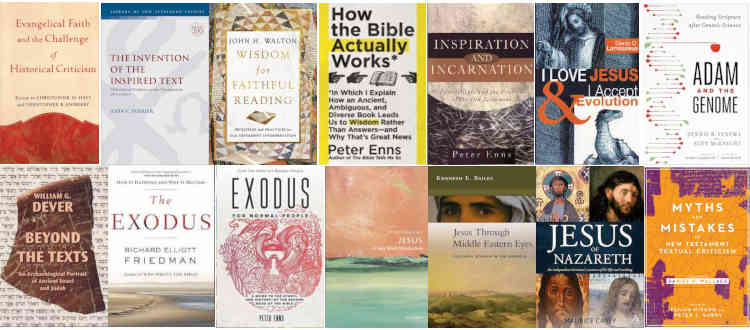
So here’s a quick review of fourteen books that have really helped me. I believe some of them might help you too. (I’ve shown links if I’ve reviewed them in more detail.)
An honest approach?
Evangelical Christians have been taught that the Bible is inerrant, or at least reliable, and that any apparent problems are illusory and can be explained – so don’t doubt. But is this an honest approach?
Evangelical Faith and the Challenge of Historical Criticism.
C Hays & C Ansberry
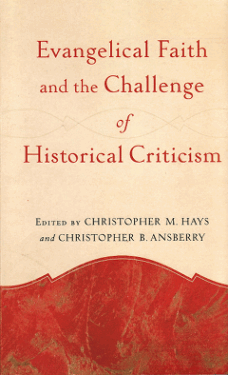
Christians who believe the Bible is inerrant are naturally suspicious of historical analysis (called “criticism”) that doesn’t make this assumption, and in fact challenges it.
But the editors and authors of this book argue that accepting the findings of historical criticism is not a threat to faith.
They address the issues of Adam and the Fall, the Exodus, prophecy, and the dating of Deuteronomy, as well as several New Testament issues. They recognise real difficulties. And they argue that the writers were not writing dispassionate history, so each selected, adapted and interpreted both history and doctrine to meet their objectives.
The Invention of the Inspired text. John C Poirier
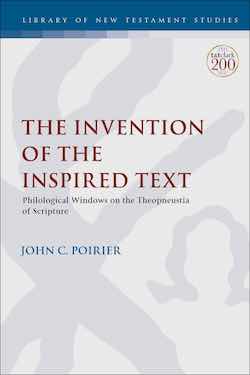
Much of evangelical theology is built on the doctrine that the Bible is the “Word of God”, meaning that it contains the very words God wanted there. And is therefore reliable in every way.
This doctrine is largely based on 2 Timothy 3:16, which describes scripture as “God-breathed”. So if God breathed it out, it must be perfect mustn’t it?
This book shows that isn’t a right understanding. At the time 2 Timothy was written, the word used should properly be translated “life-giving”. God didn’t breath it out, but breathed into it to make it life-giving, a vehicle for the Holy Spirit.
We don’t have to believe, and shouldn’t believe, that the Bible is perfect. But it is nevertheless used by the Holy Spirit to teach us what we need to know.
This is one of the most important Biblical books I have ever read. You don’t need to read it for yourself (it is very academic) but it is good you know it exists and what it shows.
The Old Testament
The Old Testament is a collection of 39 documents written anywhere from 2,200 to 3,000 years ago. They were written in an ancient language and out of an ancient culture. Yet modern day western Christians tend to read them the same as they’d read a newspaper or modern history.
But there is a better way.
Understanding the Old Testament
Wisdom for Faithful reading. John Walton
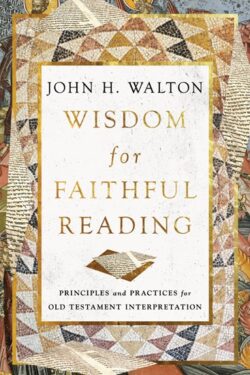
This is possibly the most helpful book I have ever read on the Old Testament. John Walton is an eminent scholar from an evangelical background, who honestly addresses issues that most conservative Christians don’t.
The book contains 37 interpretive principles, each with its own chapter. His principles recognise the Old Testament was written in a culture language and time foreign to us, so we need to avoid interpreting it the way we would interpret modern writings. We must understand culture, genre, language and the authors’ intentions.
When we do, we reach some helpful and surprising conclusions.
How the Bible Actually Works. Peter Enns
Old Testament scholar Peter Enns outlines his conclusion that the Bible isn’t some perfect book dictated by God but a response by the Jewish people to their interactions with God and the world around them. Often the Old Testament presents more than one view as the Israelite people worked their way through issues. As they learnt more, they adjusted their teachings and the texts. As a result, the Bible, he says, helps us gain wisdom about how to live and relate to God rather than fixed rules.
This view would be anathema to many conservative Christians, but Enns shows that it makes more sense of the well-known difficulties in the Old Testament. A very readable and sometimes humorous coverage of an important and vexing topic.
Inspiration and Incarnation. Peter Enns
In this earlier book, Peter Enns examines three interesting facts about the Old Testament:
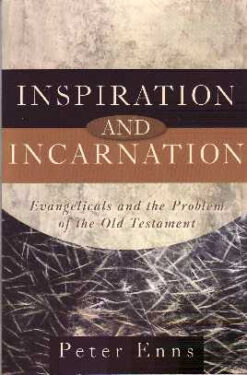
- The Old Testament and Ancient Near Eastern Literature. How some parts of the Old Testament look very similar to stories from other nations and what we can learn from that.
- The Old Testament and Theological Diversity. How there are developments and even contradictions in some teachings.
- Old Testament interpretation in the New Testament. What we can learn from very flexible (and not always literal or accurate) way Jesus and the apostles used their scriptures (our Old Testament).
These facts change the way we see the Old Testament.
Genesis vs evolution?
Evolution used to be a key issue for Christians, but many of us have moved past it now. These two books help explain why.
I love Jesus and I accept evolution by Denis Lamoureux
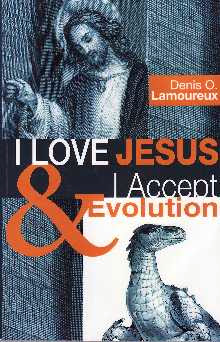
Denis Lamoureux has doctoral degrees in dentistry, theology, and evolutionary biology, the latter two obtained so he could write authoritatively about Genesis and evolution.
He shows how the Genesis account is based on an ancient cosmology and shows evidence of being a combination of two different accounts written for quite different purposes.
Then he examines the fossil and age-of-the-earth evidence and shows how the science and theology fit together well.
Adam and the Genome. Dennis Venema and Scott McKnight
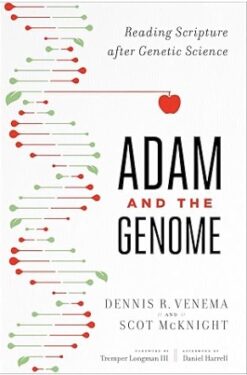
A geneticist and a Biblical scholar join forces to give a theological perspective on understanding Genesis in its Jewish cultural context, and a scientific understanding of evolution and genetics.
Genetic (DNA) evidence seems to me to be the strongest “proof” that evolution is broadly true, and this book explains why in readable detail.
And also shows in detail how this reality presents no problems for the Christian reader.
Reliable history, or something else?
The exodus from Egypt and the “conquest” of Canaan are the parts of the Old Testament most problematic as history, because of the lack of corroboration by archaeology.
Surely if it’s “God’s book”, we should believe everything in it is true? But truth comes in different forms. What if God chose to reveal himself in a way we don’t expect?
Beyond the texts. William Dever
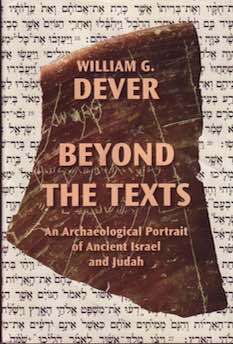
This comprehensive book by one of the world’s premier Middle Eastern archaeologists isn’t light reading, but I found it fascinating. The archaeological evidence for the Israelites in Canaan is clear:
- Many of the battles outlined in the book of Joshua appear not to have happened, or happened at some other time, or were much smaller affairs than portrayed.
- The population of Canaan after the Israelites arrived was not anywhere near the 2 to 3 million suggested by the Biblical stories.
- The kingdoms of Judah and Israel were much less monotheistic in the period of Joshua than the Bible suggests.
This may seem shocking, but when we examine the book of Joshua, we find there are two very different stories in it. Chapters 1-12 describe a full conquest; chapters 13-24 describe a much more gradual assimilation. The archaeology shows that the latter is more historical, the former more like propaganda.
The Exodus. Richard Elliot Friedman
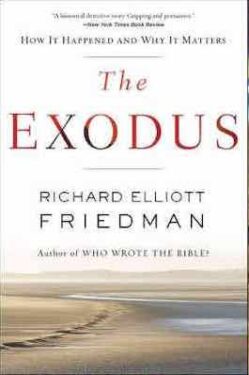
The story of Moses leading the Israelites out of slavery in Egypt in the second millennium BCE is foundational to the Jewish people and important to Christians too. But the archaeological evidence for it is scant. It seems very unlikely that 2-3 million slaves spent 40 years in the desert.
Richard Friedman examines textual and linguistic evidence to argue that an exodus did indeed take place, but on a much smaller scale than in the Biblical story.
He concludes that the escaping slaves carried monotheism with them, and this was pivotal in developing the nation of Israel and its faith.
Exodus for normal people. Peter Enns
Peter Enns also has doubts about the historicity of the exodus. He sees it as “mythicised history”, meaning it has a historical core but most of the details are there to make a point rather than record accurate history.
He outlines why he holds this view, summarises the main themes of the book of Exodus and gives some thoughts on what Christians can gain from reading it.
He argues that we should understand the Bible for what it actually is, not for what we’d like or expect it to be. Like CS Lewis, he argues we can understand God better this way.
The New Testament
The New Testament is a collection of 27 documents written between 40 CE and 120 CE, mostly towards the middle of that period, that is between one and two generations after Jesus’ death. All documents are written in common Greek, though the words of Jesus have been translated out of the Aramaic language that he would have spoken.
While the time and culture gap for us isn’t as large as for the Old Testament, it is still easy for modern westerners to read the New Testament without being aware of much of its cultural background. These books helped me better understand this.
Jesus: A Very Short Introduction. Richard Bauckham
Written by an eminent New Testament historian, this book is, after the gospels, one of the best (and shortest) books you’ll read about Jesus.
In a little over 100 pages, we learn what historians say we can know, as history, about Jesus. We get a moderate scholarly view, avoiding the extremes of sceptical scholarship and Christian devotion without much historical basis.
I think it puts faith in Jesus on a very soliud foundation, but both believers and unbelievers can get a lot out of this book.
Jesus Through Middle Eastern Eyes. Kenneth Bailey
What it says on the cover. Learn how much of what we read in the gospels makes more sense when we understand the middle eastern context. Written by a man who lived 60 years in the middle east.
So much of Jesus’ parables, teaching and actions is illuminated by Kenneth’s understanding. As I read it, I kept saying to my wife (somewhat excitedly), “listen to this!”
Read it and, I believe, you’ll never read the gospels again in the same old way.
Jesus of Nazareth. Maurice Casey
The late Maurice Casey was a New Testament historian and non-believer who fiercely critiqued more dogmatic believers and unbelievers alike. As an unbeliever, he didn’t believe in the supernatural, and so there are conclusions in this book that I disagree with.
Yet I find myself referring to it again and again because of his insights into the Aramaic language that Jesus spoke and the Jewish culture and religion of the day. Casey concludes that the first 3 gospels are useful historical documents, Jesus did perform miracles (but by natural or “folk” means), and the disciples did see visions of Jesus (even though Casey doesn’t believe Jesus was really resurrected).
Myths and Mistakes in New Testament Textual Criticism
Elijah Hixson & Peter Gurry (Editors)
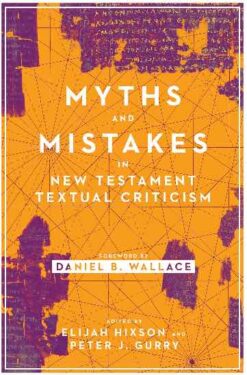
Christians will often tell us the entire Bible is historically accurate, and we can have confidence in how the original writings have been handed down to us. Sceptics may tell you we can have no such confidence, because both the manuscripts and the history are unreliable.
How do we know what to believe?
This book by New Testament scholars who are Christians steers a middle path between the extremes. It allows us to see where there are genuine probems and where crtiical assessments have been overstated.
What I learnt
Some Christians would be dismayed to read these books and see many of them as a threat to faith. But I found them faith enhancing.
Instead of seeing the Old Testament as inerrant history, with all the difficulties that raises, I can see it as an account of how God took a bunch of ancient pagans and, via the prophets, corrected their beliefs and ethics so they were prepared for the coming of Jesus.
- I no longer have to believe that an angry God commanded genocide, inflicted terrible plagues or flooded the entire world, but can see these stories as mythical or as mythicised history.
- I can keep an open mind on exactly what happened in the exodus and the “conquest” of Canaan.
- I can believe a loving God patiently revealed himself through the Old Testament and ultimately through Jesus.
And I can see the New Testament as human documents that are essentially historical, though with difficulties and some inaccuracies. I understand the gospels better and my faith in Jesus rests on a good historical basis.
I feel thankful and believe God answered my prayers for clarity through these books.