Let’s not pretend we think like ancient Israelites
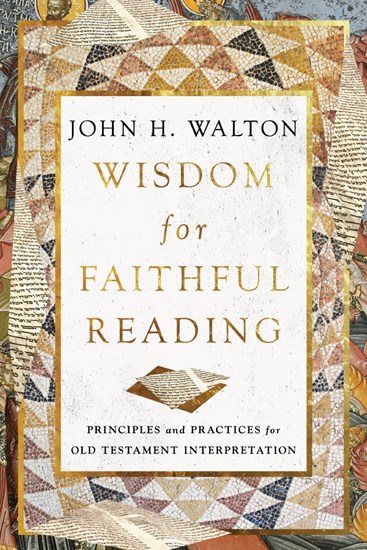
Last post I suggested that we cannot read the Bible like we would read a modern science or history textbook.
They thought differently back then and they certainly wrote differently. Modern western writing on these topics tends to be pragmatic, factual, literal, but the Bible authors didn’t always write that way.
Assuming they wrote like us will only lead us into misunderstandings.
Many of the ideas in that post came from this book. So it is only fair that I tell you a little more about what it contains and why you may find it helpful to read it.
John Walton
John is emeritus professor of Old Testament at an evangelical college in the US. You might expect that to mean this book follows a strong evangelical, inerrantist line that skips over problems.
But it actually makes his book more valuable for progressive Christians as well as the conservative Christians who you’d expect to value it. Read on to see why I say that.
37 helpful pieces of advice
The book takes the form of 37 short chapters. Each one starts with a statement of a helpful principle to properly understand and interpret what the original authors were saying and meaning. The principle is then discussed, with many examples of how each one helps us better understand different Old Testament passages.
Some sample principles (and chapter headings):
- Reading the Bible instinctively is not reliable and risks imposing a foreign perspective on the text.
- Literal reading means being acountable to the ancient author’s literary intentions.
- Words that are roughly comparable in two languages often carry different nuances
- In a hearing-dominant culture, there are no books or authors as we know them, and “book” is the last step, not the first.
- Torah is more about instruction that cultivates wisdom than legislation that results in law.
- Reality is bigger than history.
- Prophecy is not prediction.
Read some of them over again and ponder how following his wisdom would change how we see the OT. For example, if the Torah (the OT Law) is more about cultivating wisdom than imposing rules, why do we so easily apply it legalistically?
And if we understand how most OT books were the result of a process of being passed down orally and modified before finally being written down, we might understand them better and be less concerned about apparent anachronisms.
Applying the principles to text
Walton makes the rather obvious point that we need to understand genre before we try to interpret a passage. This leads him to some interesting conclusions:
- The book of Job is wisdom literature, and this genre can use various literary forms. So the book could be a factual account, but it could also be a “thought experiment” to discuss a deep philosophical issue.
- We naturally read the book of Joshua’s account (chapters 1-12) of the total conquest of Canaan as literal and accurate history. But, Walton says, the genre of Middle Eastern conquest accounts characteristically used hyperbole by exaggerating the scale of victory and the number of casualties to make a point. We should read Joshua with that in mind.
Correcting obvious but wrong interpretations
- The tower of Babel story is obviously about proud people trying to reach up to the heavens. Except Walton says it’s not. It’s actually about people trying to bring God down so he can shower them with blessings. Their sin isn’t pride so much as greed.
- The OT Israelites had no knowledge of, or ideas about, a “devil”. The Satan is mentioned in Job but he isn’t the devil as mentioned in the NT, nor does Isaiah contain a reference to the supposed fall of the devil out of heaven.
- Christians often see the OT as full of Law that can easily become legalistic (in contrast to the NT which is all about grace). But Torah, referring to the first five books and often translated as “law” is better translated as “instruction”. So instead of being rules that must be followed, it is instruction to help develop wisdom. “We cannot cite any given provision of the Torah and claim that this is God’s authoritative word to us ….”
Choosing who to take notice of
There are always many opposing views on any doctrine or Biblical interpretation. It is easy to find the “expert” who supports our existing understanding, and ignore the rest.
I believe there is a better, more honest and more reliable, way. I am most inclined to take notice of someone who concludes oppositie to what I’d expect of them.
In interpreting the gospels, I feel more comfortable believing what an atheist scholar endorses as historical, and being sceptical about what a Christian scholar rejects as historical. Both are softening their natural viewpoint.
It is likewise with John Walton. He is an evangelical Christian who taught at an evangelical college and this book is published by an evangelical publisher. He accepts as historical some aspects of the OT that I regard as folk tales or myth.
So when he modifies or speaks against some of the cherished evangelical views on the OT, I believe he shows his integrity. And make no mistake – accept everything he says in this book and you end up with a very progressive and thoughtful view of the Old Testament.
The verdict
This one of the most important books about the Bible I have ever read. It is well worth reading for anyone interested in Biblical interpretation. I wish more evangelical pastors would read it and take notice.




One problem that I have with this is, that in order to “understand” the Bible, you have to actually study theology, history, ancient culture and the like. So we’re back to the old Roman Catholic view that laymen shouldn’t read the Bible because the will misunderstand it? Where is God speaking through his word? How does God speak through the Bible then? Only to experts?
Don’t get me wrong, I actually agree with this article (and I studied theology as well, though long ago), but I struggle with the possible consequences and I grapple with how to understand the Bible then…
Hi Eric,
Looks like you have more thn one Martin on your subscriber list!
Thanks for your post.
I haven’t heard of John Walton or read the book, however while I agree with much of the quoted takeouts e.g.reading the bible with knowledge of varying literally genres) from it I have a few of concerns.
1. The comment on the Tower of Babel story is strange, for if it is about ‘bringing God down’ for increased blessing, why is neither God nor blessing mentioned in what they are quoted as saying.
2. This would seem to be a case of eisegesis (reading into the text what is not there, or even worse what you want to be there!) as opposed to exegesis, i.e seeking to extract from the text what actually is there.
3. The whole story seems to be about themselves (‘let us’ x 3) which is a major characteristic of Pride.
e. g their pride in their superior (by their standards) technology;
their desire to build a city for themselves – cities generally have a negative connotation in the
bible except for the end of Revelation.
their desire to provide for their own security, rather than depend on God, by building a
Babylonian-type Ziggurat as a fort.
4. Their seeking to make a ‘Name for themselves’, again a prideful not godly chartacteristic, rather
than glorifying God with the use of the blessings he has already given them.
5. People died so that the Bible could be released from the captivity of the clergy and read in
their own language by the common people. Yes ordinary people can make mistakes, but so can experts! We all need
humility in our interpretation!
6. I cannot see any reason why we should let go of the tradtiional understanding of the Babel story as the fourth ‘Fall’ story (Adam, Cain, Noah, Babel) in the early Genesis chapters which outline tyhe human probel, before leading into Abraham and the beginning of the great story of God’s Grace-ful plan of salvation.
6. ” We cannot cite any given provision of the Torah and claim that this is God’s authoritative word to us ….”. Seemingly contrary to Walton, Orthodox Christianity of all flavours, ever since the Cannon of scripure was finalized, have indeed taken the O.T as authoritative. The question is, not its authority but how we understand it. Rather than cutting out the parts of the Bible I don’t like (there are many!) or don’t weant, I follow Luther’s approach.
In paraphrase – ‘ Much of the Bible is hard to understand, so I get on with doing the parts I can understand and keep working at the rest’.
Thanks again for all your work in these posts, especially the challenge of this one.
Blessings in Christ,
Hi Martin (1), it’s good to read your comments, thanks.
“One problem that I have with this is, that in order to “understand” the Bible, you have to actually study theology, history, ancient culture and the like.”
I have thought about this a bit and I have half an answer. I think the essence of Christian belief (e.g. Jesus as saviour and coming king, forgiveness, loving enemies, the need for repentance & faith, etc) can be easily understood from the gospels by someone with a simple faith. They don’t need to understand what Walton is talking about here. But if we want to delve more deeply, THEN we need Walton’s ideas.
The only problem with this is that a simple reader of the OT could come up with some terrible beliefs, like God apparently commanding genocide, and thinking that justifies similar behaviour today. And I note that Netanyahu (hardly a simple reader, I know) has used those OT commands to justify what Israel is doing in Gaza.
I can only think that God takes enormous risks and leaves us free to do enormous harm if we choose to, because the gifts of freedom and the abilities that he has given humans are somehow worth the pain. And so the risk of the OT being misused is just part of that larger issue. But I’m not entirely happy with that conclusion.
Hi “Unbounded” Martin, it’s nice to hear from you, as always.
Re Babel, Walton simply says the story teller (or editor) adds details his readers may not have otherwise known (e.g. the building materials) but omitted details they all would have shared and known. He says the purpose of the tower (to bring God down) is in that category – ancients would all know this. And it is hinted at when the story says God “came down”. Walton also says that we moderns naturally think the sin was pride, but he says the idea was that if God did come down to shower them with blessing and prosperity, that would make the name for themselves and prevent them being scattered (presumably by other peoples).
Re the Torah: If he is right that Torah is instruction to give wisdom, not laws to be followed unthinkingly, than taking it as authoritative rules would be a mistake, even if Christians have always seen it that way. (After all, Christians accepted slavery for centuries – apparently Augustine and Aquinas both justified it – but there came a time when Christians started to see it as an evil to be eliminated.)
There are apparently conflicting commands in the OT, plus teachings no-one wants to teach today, so even those who say they believe it is authoritative rules nevertheless ignore or explain away many things. (It is them who are “cutting things out”, not Walton, who is keeping everything but trying to understand it as the authors intended. So I don’t think it is as radical as you may think to see it as Walton suggests.
Maybe I should lend you the book!
During the COVID lockdown, John Walton did a lecture series on the book of Job that I watched. I think there were over 20 lectures. He described Job as being a “literary construct”; a “what if” scenario? I found that to be super helpful in bringing the book out of the presumed literal historical narrative constraints to reveal some of the best prose ever written. Spiritually (and ironically), it made the book of Job come to life for me. Since then, I purchased the NIV Cultural Backgrounds Study Bible, where all the many old testament commentaries are all written by John Walton. I’ll see if I can get my hands on this book.
Thanks
Wow, 20 episodes on Job! That’s probably more than I could focus on! Well done!! But he does seem to be a most interesting and expert person, so I hope you find this book as helpful as I did.