People raised as Christian can give up their faith or leave the church, maybe to gain some peace of mind or intellectual integrity which they can no longer get within organised Christianity.
Some never return. Others reconstruct their faith on a better basis, maybe find an new church or new friends on a similar journey.
It would surely be best if this process was unnecessary. If Christian parents and churches could teach and live a faith that makes sense in today’s world and is consistent with what we know about the world and ourselves, then Christians would not only know what they believe but also why.
I’m not then only one thinking this way. Some Christians are preparing workbooks and courses to address this need. But there are some problems.
Reasons to believe
People believe, and disbelieve, for many different reasons. Some believe what they’ve been told. Others feel they’ve experienced God and that belief is unshakeable. Others look for objective evidence.
When we’re young, we will likely believe whatever our parents, church or school teach us. Later, those who remain in their Christian circle of friends and activities, will likely continue in faith, even if they have doubts.
But those who move out of those “safe” environments, perhaps to pursue study or work, or to make new friends, may find their faith challenged by new questions and beliefs.
Some will find that the questions raise sufficient doubt to lead them to give up their faith. Others will struggle to find answers to questions that their Christian upbringing didn’t equip them for.
Recognising all this, some Christians and churches are becoming more committed to preparing believers for difficult questions – sometimes called “apologetics”. But I feel there are two traps to avoid.
1. Truth vs dogma?
Why are churches doing apologetics? Is it because they want their younger members to know the truth, or is it so they continue to believe the church’s teachings?
Apologists will say these are the same thing, there’s no conflict. And maybe that’s true, sometimes at least.
The key question is, if an honest, evidence-based enquiry points to the church’s doctrine needing to be reviewed, are they willing to do it?
Case example:evolution vs Genesis
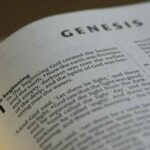
The science of biological evolution has presented a challenge to how churches interpet Genesi 1-3.
Not all early church theologians interpreted Genesis literally. Origen and others thought it was symbolic. Augustine said it was written to fit the understanding of the people of the time.
The Roman Catholic Church has accepted the fact of evolution and adjusted its interpetetation accordingly. Many modern Christians do the same. But conservative evangelical churches have preferred to treat Genesis as literal (contrary to the conclusions of most scholars) and oppose evolutionary science.
This means the strong scientific evidence for evolution is disregarded, and Christians are urged to follow an interpretation that isn’t required by the text, and hasn’t always been believed by theologians.
Dogma has triumphed over evidence. The apologetics that follows from this conclusion isn’t convincing, and is a major reason why many Christians have struggled to continue to believe in the Bible.
The dangers of dogma-based apologetics
If churches or apologists know the answer they’re looking for, it can easily lead them into poorly-based and even dishonest apologetics. Some examples ….
“Archaeology proves the Bible”
You can find websites saying this. And preachers repeating it. But it is only partly true at best. The archaeological evidence:
- provides some confirmation of names and events in the Old Testament from about 900-400 BCE,
- shows the stories of Moses and Joshua are not very historical,
- has little to say either way about the early Old Testament, and
- gives some useful background to the New Testament.
Thus archaeology suggests that some parts of the Bible are historically correct while some parts are not – which isn’t what apologists often say.
“Fulfilled prophecy proves the divine origin of the Bible“
I’ve seen this argued online and in books, and this too is misleading. For a start, it distorts what Old Testament prophecy was – not a detailed prediction but an attempt to express God’s attitude to injustice or opposing his plans. The prophets used colourful and hyperbolic language to illustrate their convictions.
There are distinct problems if we take them too literally as predictions. I have examined a couple of prophecies (by Ezekiel and Jeremiah) in detail and found the broad thrust of the prophecies were fulfilled, but some of the details were not. They may have served as a warning in their day, but they don’t prove divine origin, because they weren’t 100% fulfilled.
Difficulties for questioning Christians
Trouble is, if a Christian has been taught bad apologetics, like the two examples above, and they’re challenged on the matter, a little internet searching will show than that their confidence was poorly based.
This can be devastating. I have seen people give up their faith in disillusionment.
There are plenty of good apologetics arguments around, based on good science or history. But they will often require some adjustment to our understanding of the Bible and of God.
This is true of my own experience. Thinking through apologetic issues has led me to change my views on some matters to fit the clear facts. My faith is stronger because of it.
So if we are going to do apologetics, let’s allow it to point to evidential truth, even if we need to adjust our dogma.
I plan to write a few ideas on good apologetics in my next posts, so stick around for that!
2. The internet is a murky place
In 2024 Jenny Ingram published a book Bible Study Workbook for Kids: Lessons, Activities, Quizzes, and Questions to Deepen Your Faith. I haven’t looked at the book so I don’t know if it will really help parents give their kids a better set of reasons to believe.
But it’s received some good write-ups and seems to be well written and illustrated. Well enough, sadly, that it seems to have been pirated and its ideas copied via AI.
Not just once, but literally dozens of times.
It seems this is an internet phenomenon – find a trending search term and book, use AI to generate an almost identical product, then launch it with a fabricated “author” and a generic bio and an impassioned hard sell.
In this case scores of similar workbooks are npw available online and even through reputable bookstores and Amazon. Well meaning Christian parents looking to help their kids will be more likely to find the copy than the original, and order it. It isn’t clear if they all receive what they expected, but getting money back is virtually impossible.
Jenny doesn’t get the reward for her work and buyers get an inferior product, often at a higher price.
I’ve written all this up in detail at A scam made for good Christians? But I thought this was a good opportunity to inform readers of this blog.
So in our enthusiasm, let’s be wary of online purchases, and check out authors, reviews, publishers, before buying.
Photo: Bob Price.